
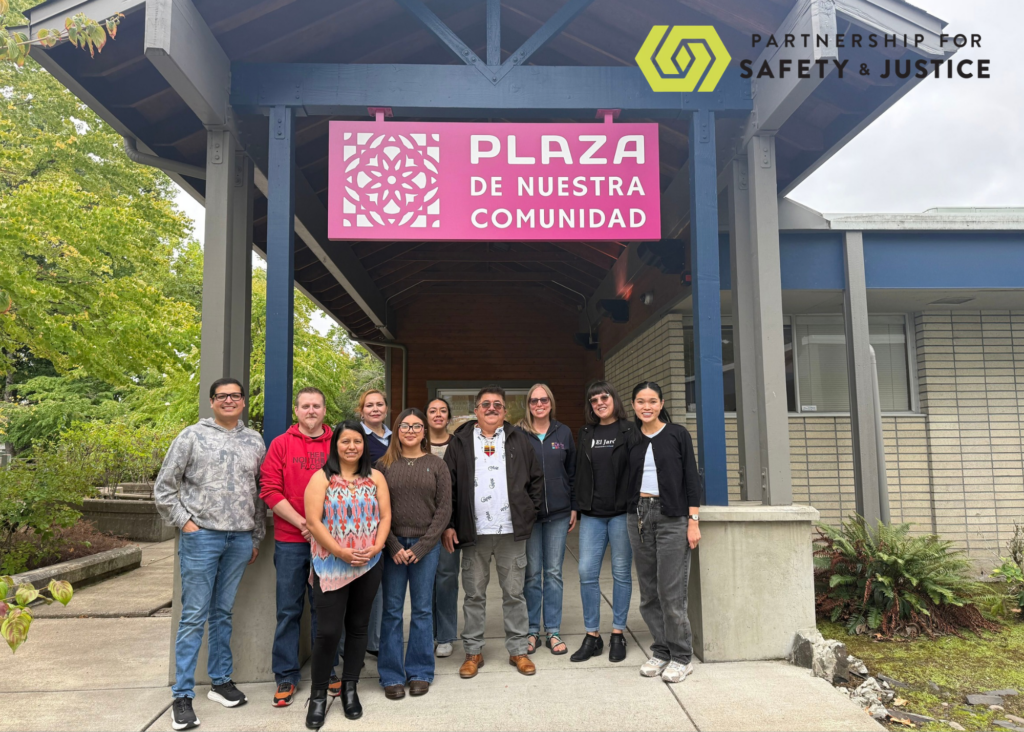
When Keely and I recently visited Plaza de Nuestra Comunidad, we came to learn more about its recovery services and see the larger building that Measure 110 helped make possible. For me, the visit was also a reunion—and a chance to see what years of advocacy, investment, and trust had helped build.
I first came to know Plaza’s SUDs Clinical Supervisor and Program Manager Basilio Sandoval and his team when the organization was Centro Latino Americano. Centro later joined with Downtown Languages and Huerto de la Familia to become Plaza de Nuestra Comunidad, bringing recovery services, education, community gardens, small-business support, and other resources together for Latino and immigrant families in Lane County.
Our work together began through the Health Justice Recovery Alliance. Before moving into my current role at PSJ, I served as HJRA’s executive director and communications director. What began as an effort to support Measure 110’s implementation grew into a five-year statewide campaign to protect its promise: replacing punishment with care and investing in communities most harmed by the war on drugs.
Providers like Plaza were central to that work. Through HJRA’s Policy Table, service providers, advocates, policy experts, and people with lived experience helped shape funding priorities and legislative strategy. Together, we challenged misinformation, fought attempts to cut Measure 110 funding, and helped community organizations build the capacity to serve more people. HJRA’s legacy site tells the fuller story of what we accomplished.
Basilio was one of the coalition’s most dedicated provider advocates. He joined lobby days, met with lawmakers, and testified in Salem year after year because he understood that decisions made at the Capitol would determine whether people in his community could get help.
In 2022, when legislators considered taking money from the Measure 110 services fund, Basilio warned that cutting the funding meant taking “lifesaving services” from Oregonians. He explained that early funding had helped Centro create a peer mentoring program, train three bilingual and bicultural recovery mentors, and hire two substance use disorder counselor candidates. He returned to the Capitol in 2023 to testify on Measure 110 implementation and again in 2024 to oppose recriminalizing drug possession.
His message has remained consistent: people struggling with substance use need care, and Latino communities need services they can trust.
That trust is not automatic. Many Latino and immigrant families encounter systems that do not speak their language, understand their culture, or feel safe to approach. People may be uninsured, unsure whether they qualify for help, or worried about how an institution will treat them. Plaza has spent decades closing that distance.
A Place Where Recovery Feels Like Familia
Plaza’s building has room for outpatient treatment, individual counseling, assessments, group meetings, and family gatherings. At its former location, staff shared offices and had little space for a growing program.
There is also room to celebrate. Basilio showed us where Plaza holds monthly graduation gatherings for people completing treatment. Clients receive certificates, share food, and talk about their experiences with family members and other supporters.
“We are a safe space for our recovery community,” Basilio told us.
Some graduates continue coming back because of the relationships they formed there. Treatment is only part of what Plaza offers. People also find connection and belonging.
Meeting Each Person Where They Are
Plaza does not treat recovery as a fixed path. Staff assess each person’s circumstances, build a plan around their needs, and adjust that support over time.
“Each person is different,” Basilio said.
Counselors and peer mentors work together to connect clients with mental health care, medication support, family counseling, and other resources. Mentors also help people navigate medical care, housing, employment, and education.
Families are part of the process. Plaza offers education and support so loved ones can better understand substance use disorder and participate in someone’s recovery. As Basilio explained, “It’s really important to include the family members as part of the recovery process.”
Measure 110–funded vans help clients reach treatment and medical appointments. Transportation may sound like a small detail, but an available appointment does little good if someone cannot get there.
Reflecting on Measure 110’s impact, Basilio said it helped expand bilingual, community-centered programs where people feel “safe, understood, and respected.” That trust affects whether someone asks for help, returns after a setback, and stays connected to care.
Growing Food—and Community
Some of the most memorable parts of our visit were not things people usually think of as treatment.
Plaza’s clients work together in community gardens, planting vegetables and flowers, tending the plots, and taking the harvest home. Staff told us that gardening helps people manage stress and build friendships. For some clients, it also reconnects them with experiences from the countries where they grew up.
Plaza offers other opportunities to volunteer, spend time outdoors, and participate in activities with family. These experiences help people build routines and relationships beyond the treatment room.
This is part of community safety. People are safer when they are connected, can meet their basic needs, and have places where they are known and valued.
Why Culturally Specific Care Matters
Plaza is Lane County’s only culturally specific Behavioral Health Resource Network. Its role is especially important as Latino and immigrant families face heightened immigration enforcement, fear, and hostility.
When people worry that interacting with an institution could expose them or their families to harm, they may avoid seeking help. Organizations with deep community relationships become essential bridges to health care and recovery.
The drug war and criminal legal system have disproportionately harmed Latino and other communities of color. Culturally specific providers offer a different response, grounded in dignity, language access, and community knowledge.
During our visit, Basilio spoke about the need for bilingual outreach and peer navigators. “I want to advocate also for our community,” he said. He later described the larger goal: offering people services “instead of sending someone to jail or prison.”
Building Communities, Not Prisons
At PSJ, we talk about building communities, not prisons. Plaza shows what that looks like in practice.
It looks like a counselor who speaks your language, a ride to an appointment, and a peer mentor who helps you navigate housing or health care. It looks like families gathering for a graduation and people carrying vegetables home from a garden. It looks like an organization that has earned its community’s trust and continues to advocate for that community in Salem.
Measure 110 helped make Plaza’s building, vans, additional staff, and expanded services possible. These investments give more people a chance to find stability without being pulled into the criminal legal system.
I left grateful for the time Basilio and his team shared with us, proud to continue supporting their advocacy through PSJ, and certain that Oregon should protect and expand this kind of community-based care.
If we want a future where people can heal, families can remain together, and fewer people are sent to jail or prison, we need more places like Plaza de Nuestra Comunidad.
Support Plaza and its work in Lane County.