2026 Legislative Priorities
Safety, Healing, and Fiscal Responsibility
Every Oregonian deserves access to services that prevent harm, support healing, and strengthen safety. Oregon’s experience shows that community-led alternatives to incarceration reduce violence, lower recidivism, and save public dollars — while prison expansion does the opposite: separating families, deepening trauma, and wasting scarce resources.
This is the year to build on smarter investments that deliver better outcomes for survivors, families, and taxpayers:
Protect Culturally Specific, Community-Led Safety Services
Fund the Justice Reinvestment Equity Program (JREP) at $4.3 million
JREP supports 18 culturally specific organizations providing victim and survivor services, violence prevention, and reentry programs across Oregon.
In its first year alone, JREP reached 5,000+ Oregonians across most of the state’s 36 counties. Programs show measurable reductions in violence and repeat justice involvement.
Why now: Federal policy changes threaten healthcare and social services that communities rely on. Without JREP, increased service gaps and disparities will further harm the communities and organizations already impacted by federal and state assistance.
To continue providing trauma‑responsive, culturally specific support, JREP requires a $4.3 million base investment to maintain Oregon’s statewide infrastructure for healing.
No New Prison before Strategic Planning and Stakeholder Engagement
Reprioritizing DOC Feasibility Funding for Long-Term Planning
Before moving forward with plans to construct a new prison, Oregonians deserve strategic, long-term planning and meaningful stakeholder engagement which evaluates:
- Existing capacity and population trends
- Staffing shortages and facility conditions
- Long-term fiscal sustainability and public safety outcomes
- Crime victims, incarcerated and formerly incarcerated, and the families of both need to be prioritized.
Given the state’s budget situation, Oregon should prioritize improving public and community safety outcomes for people in custody, DOC staff and victims alike.
Keep Families Together
Protect the Family Sentencing Alternative Program (FSAP)

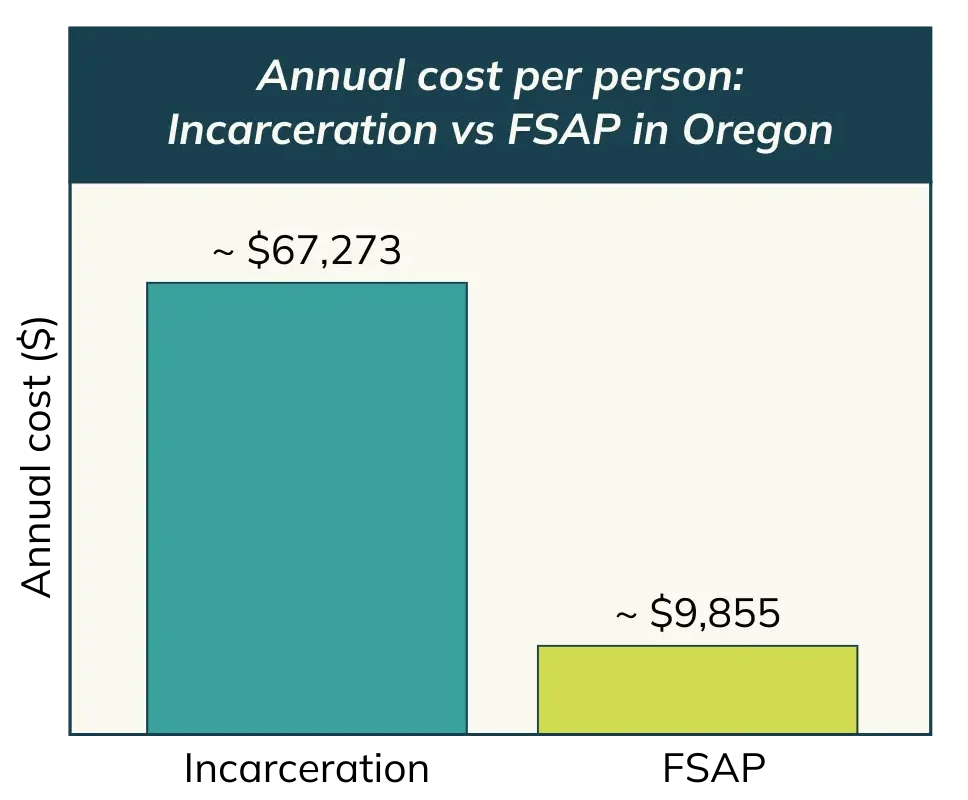
FSAP provides court supervision alongside treatment, housing, and parenting support—preventing unnecessary incarceration and foster care placements.
Beyond these direct savings, FSAP achieves better outcomes for children, families, and public safety.
Last session, FSAP was expanded and made permanent. Despite its strong outcomes, the program is currently facing potential budget cuts. We need to sustain its funding to ensure that more families can benefit from the program.
Our Partners’ Legislative Priorities that We Strongly Support
Advance Immigrant Rights
Families deserve to feel safe and united, but ICE raids disrupt our sense of security deepen fear of government violence, cause trauma and instability for those impacted and our communities as a whole.
We’re always fighting the harm caused by the criminal legal system and that’s why we support the 2026 Oregon Immigrant Justice Package, which includes measures aimed at expanding access to legal services, medical care, food assistance, housing support, and protections against ICE raids, racial discrimination and profiling, data breach, and masked law enforcement agents.
Protect M110-Funded Behavioral Health Services
Cuts to Measure 110-funded services threaten the state’s mental and behavioral health infrastructure.
Over the years, we’ve made progress in expanding low-barrier addiction treatment, overdose prevention services, housing, recovery and peer support services, and employment supports.
These services break the cycles of homelessness, addiction, and incarceration that affect so many families and communities.